
Masterclass: Prepping for Auditions
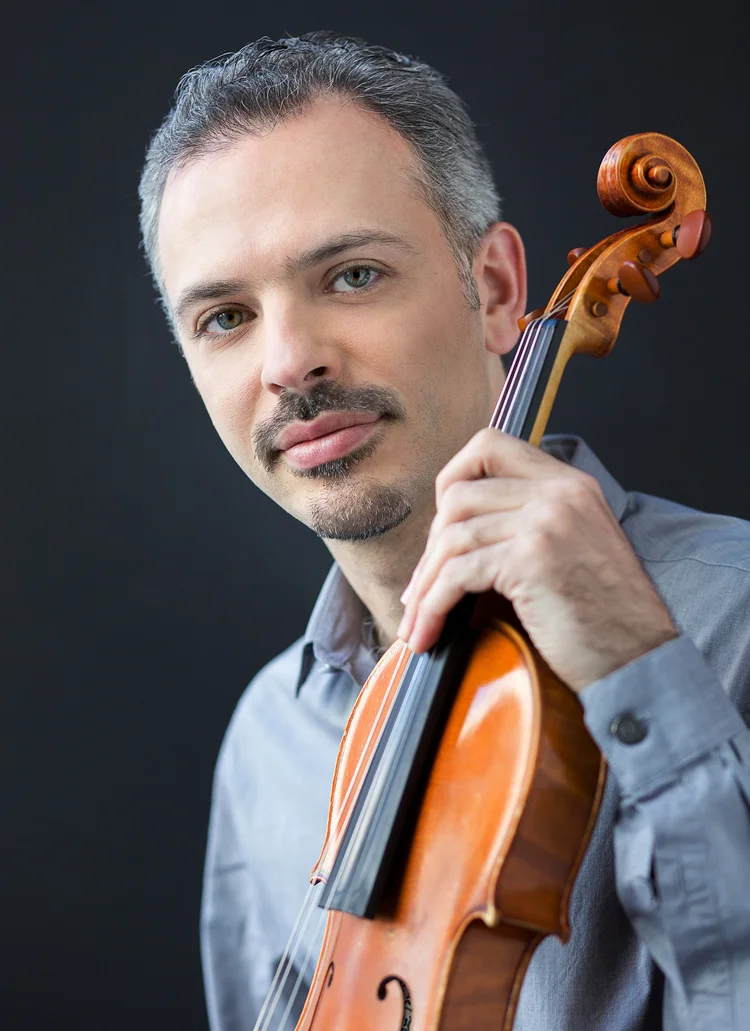
Join us for a Masterclass with Colin Jacobsen, of Brooklyn Rider, the Knights, and The Silk Road Ensemble to explore and learn about how to best prepare for an audition.
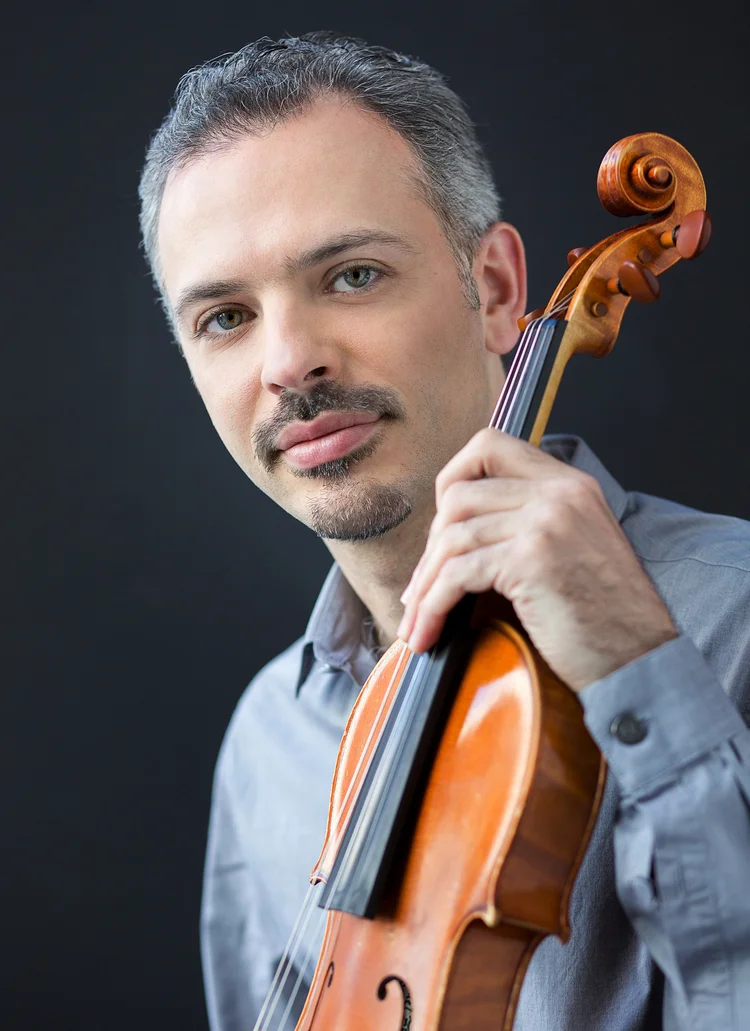
We are excited to welcome Colin Jacobsen to the Brooklyn Music School’s Artist Advisory Board! Colin will be holding a Masterclass on Sunday, October 14 at 12 noon for students of all ages on the topic of preparing for auditions.
Students of all ages, instruments, and levels preparing for auditions (for example, middle school, high school, college) will play for Colin and he will adjudicate them and advise them on how to improve before the audition. Colin will also discuss tips and best practices for auditions for everyone. This event will take place on the BMS theater stage and is open and free to the public.
ABOUT COLIN JACOBSEN
A recent recipient of a United States Artists Fellowship, Colin Jacobsen’s multifaceted life in music as a violinist and composer is focused in three groups: the Silk Road Ensemble, founded by cellist Yo-Yo Ma; the string quartet Brooklyn Rider, which performs at venues as diverse as Carnegie Hall and SXSW; and The Knights, an innovative orchestra of which he is founder and co-Artistic Director along with his brother, Eric Jacobsen. Brooklyn Rider just released a new album “Dreamers” with the Jazz vocalist Magos Herrera. This past year, The Knights released “Azul,” an album with cellist Yo-Yo Ma as well as debut performances at the Kennedy Center in Washington DC, the new Elbphilharmonie in Hamburg and the Festival de Pacques in Aix En Provence.
Interview: Elisa Sutherland
An in-depth interview with mezzo-soprano Elisa Sutherland on playing the role of Hera in the upcoming Brooklyn Opera Works production of “All Wounds Bleed.”
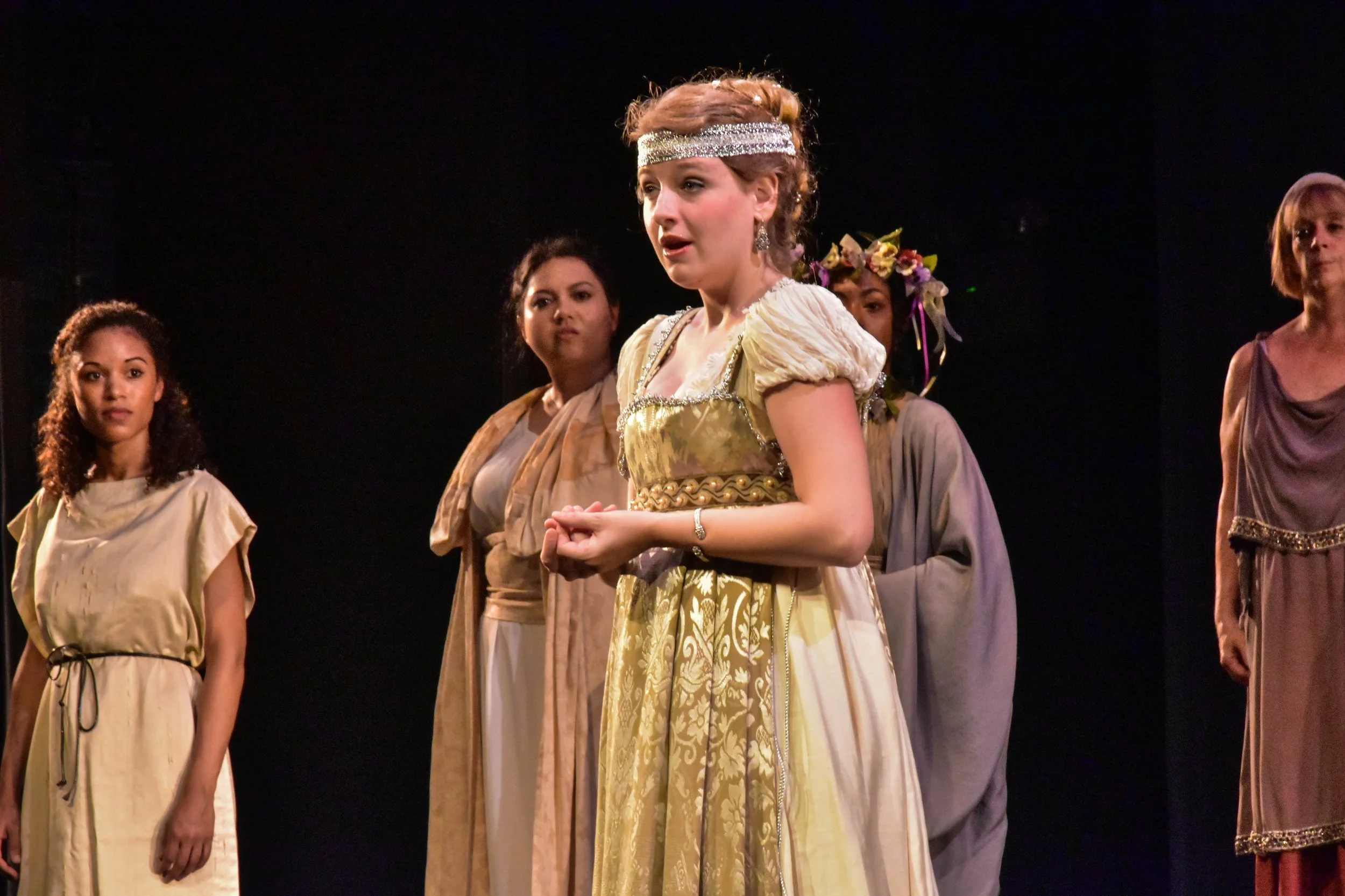
On Wednesday, August 22 and Friday, August 24, Brooklyn Music School will present the performance of “All Wounds Bleed”, a contemporary opera that depicts the myth of Echo and Narcissus. The role of Hera will be played by Elisa Sutherland, a mezzo-soprano who has performed with a variety of companies, including American Bach Soloists, Apollo Chorus of Chicago, and Quicksilver Baroque. In addition to winning the Philadelphia District of the Metropolitan Opera Auditions in 2015, Elisa is the 2014 winner of the Lynne Harvey Cooper Award and was the first-place winner of the inaugural Handel Aria Competition at the Madison Early Music Festival in 2013. I had the chance to interview Elisa about her upcoming performance as Hera in “All Wounds Bleed”, as well as her past role as Queen Dido in “Dido and Aeneas” and her work as an opera singer.
Q: What drew you to opera?
A: I had the most amazing elementary school music teacher - her name is Jayne Perkins, and we're actually still great friends. When I was in second grade, she encouraged me to audition for a small role in a production with Milwaukee's children's theater, and this led to other small roles in community theater productions and in operas at Milwaukee's largest opera company, Florentine Opera. Ms. Perkins would also take me to see operas - I remember sobbing at the end of Madame Butterfly in fourth grade. I owe my love of opera and of classical music to her!
Q: How do you get into character?
A: I always start with the text. Memorizing text is great because, in order to remember the exact wording, you need to come up with a motivation for the character. Why did the character use this word and not another? Why did she use a contraction there, and not here? I've spent a lot of time thinking about the difference between saying "I will" and "I shall" - and it's in these slight differences that you really get an idea of who a character is.
Unsurprisingly, I also think the music informs a lot about character, especially in contemporary opera. The composer isn't bound by any stylistic rules (as in Baroque or Classical styles), so the music they compose for each character can be quite individual.
Q: How do you prepare for a show?
A: I always read through the entire score - I like to know the scope of what I need to learn. Even when I'm just memorizing or going over notes, I make sure that I'm always trying out new ways of communicating my character's feelings and intentions - perhaps trying out different dynamics, or opposite word stress, in the hopes of revealing something new about the character. And, of course, I practice a lot.
Q: What did you like most about working on “All Wounds Bleed?” What do you like most about the character you are playing, Hera?
A: I love playing Hera - she's so fiery and disdainful. She is first and foremost a queen - even when overcome with emotion, she maintains a dignity that is unshakable. And on a sillier note - I love librettos that rhyme. It's so satisfying to deliver a zinger when it rhymes perfectly.
Q: What is it like playing a lead role in a baroque opera “Dido and Aeneas” vs. the role in a one-act chamber opera “All Wounds Bleed”? Is the process for getting into character and preparing for the show the same or are there significant differences?
A: It's much easier to relate to a contemporary character because the text is usually more accessible. The language is more colloquial, and you don't have to deal with many text repetitions, unlike in Baroque opera, where entire sections of text will be repeated. Even in "All wounds bleed," which is written in verse, Hera's sensibility is imperious, biting and sarcastic, which is easier to play than classically grief-stricken, or passionately in love - at least for me! In some contemporary operas, the music is the most difficult part for singers, but Chris Cerrone's score is quite accessible and stark, allowing for a lot of musicality to come from the singers instead of crowding their lines with a lot of activity in the orchestra (or in our case, piano).
However, I would say the main processes of learning the music and understanding the character is very similar. And the need for working the music into your voice - understanding how you relate to the character, how your interpretation will alter or influence them - this is all the same.
Q: Are the characters treated or handled differently by a contemporary composer vs. a baroque-era composer?
A: I think people write lines and write music for characters that they can imagine themselves inhabiting. So, modern composers and librettists will naturally imbue a more modern sensibility into their characters. In the first scene, Hera breaks down in front of Echo - she weeps, and the shock that Echo feels at seeing the Queen of the Gods cry becomes a theme for the rest of the show. In a traditional setting of this myth, Hera wouldn't need to appear so vulnerable or so human, but as modern performers and modern audiences, we want to see people in these kinds of situations! This humanization of Hera is actually the central tenet of the piece - when Echo expresses surprise that the Queen can feel emotions, and cry, Hera responds that "all wounds bleed" - god or mortal, no one escapes the pain of being alive.
Q: What do you think makes this show unique or worth seeing?
A: It is always worth seeing operas written recently, preferably by as wide a range of people as you can. We're in a post-genre era, where composers have complete liberty to put whatever they want on a page. How exciting is it that Chris Cerrone decided to write what he did when he could have done anything?
But more specifically, I think the libretto for "All Wounds Bleed" is incredibly well-written and entertaining, the music evocative and moving. The myth is itself a mind-twisting examination of jealousy and the horrible things we do for love, and Chris and Tony update the story in a way that makes it incredibly fun for modern audiences, but also maintains the integrity of the original.
Q: What do you think makes the Summer Vocal Arts program unique or worth participating in?
A: I think SVA is a great place to meet other singers - people come from all over the city, from all sorts of experiences. Lina provides so many opportunities for her students - from great roles in operas, to a cabaret, to an art song recital, to masterclasses! And Marie is entirely committed to producing great theater. I know that just by being around them, I was inspired in my own artistic endeavors.
Q: Is there a message or moral you believe the audience can or should receive from this show?
A: Echo is twice-punished - by herself, and by Hera. Does her crime, having an affair and falling in love with Zeus, justify this? Is Narcissus' fate deserved? By punishing Echo, does Hera find any consolation? I think I won't know this until we've performed the piece a couple of times!
Q: Is there anything else you would like to say about this show or the SVA program?
A: Only that I hope people come out to support contemporary opera in their communities, and that more small companies will take a chance on new music!

Interview: Christopher Cerrone
An interview with composer and BMS Advisory Board member Christopher Cerrone about “All Wounds Bleed” a one-act chamber opera of his that Summer Vocal Arts students will be performing on August 22 and 24.
by Rachel Wilson
On Friday, August 24, Brooklyn Music School will present the performance of “All Wounds Bleed” as part of its Summer Vocal Arts program. This performance is a one-act chamber opera composed by Pulitzer Prize finalist and BMS Advisory Board member Christopher Cerrone. The libretto was written by Tony Asaro, a multi-talented artist who has worked as a librettist, lyricist, conductor, vocalist and producer throughout New York City and the Bay Area. I had the chance to interview Christopher about the show and why you should go see it!
Q: How did you come up with the idea for “All Wounds Bleed?”
A: "All Wounds Bleed" was written as part of a mentorship program with American Lyric Theatre Composer-Librettist Development Program. The final project was to collaborate with a librettist in the program on a new project and the whole thing is written rather quickly (a month for 30 minutes plus a libretto), so it was an exercise in trusting one's first instinct. Tony and I had written a little aria, Gesualdo’s Lament, that we both liked a lot, so it seemed natural for us to work on this project together.
Q: What was the inspiration for it? What drew you to write an opera around the myth of Echo and Narcissus?
A: Tony and I toyed around with different ideas — being from different backgrounds (him mostly in music theatre and me mostly more experimental opera), we found mythology to be neutral ground. Surely these ancient tales have enough resonance. As for Echo and Narcissus, what timeless subjects that could have a modern edge. And this was written before Instagram! Of course, the musical resonates.
Q: What is the overall process for writing a production such as this?
A: The process was very quick! But I was very thankful for Tony’s extremely structured libretto — it gave me a lot to rely on as I composed—the choices of recapitulating material were most certainly his!
Q: Are there any messages you want the audience to receive from this work?
A: I think we were both a bit heartbroken at the time of writing — surely the scorned Hera is the character who we both resonate with the best.
Q: Why did you decide to write this as a one-act chamber opera?
A: The project originated in ALT. However. I’m pleased to say that I’ll be orchestrating the work for a large chamber ensemble for a performance this coming May 2019!
Q: What are some of your favorite types of productions to compose or work with?
A: I love the collaborative nature of opera — visuals, movement, sound, and words come together to make something greater than its parts. However, like it or not, drama seems to be a part of the process so I’m occasionally happy to just write a piano piece or a string quartet too.
Q: Is there anything else you would like to say about this production?
A: I am thrilled the Brooklyn Music School is taking the work on! I’m so glad it can have a new life with these young singers!
Interview: Deborah Wright Houston
An intimate look at the world of Deborah Wright Houston, the costumer behind the upcoming Summer Vocal Arts productions “Venus & Adonis” and “A Shepherd’s Tale”

by Rachel Wilson
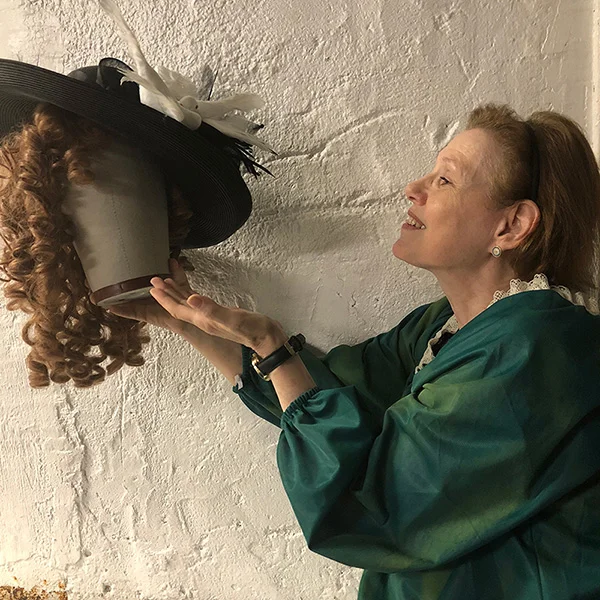
Brooklyn Music School presents two upcoming shows, “The Shepherd’s Tale” and “Venus and Adonis.” “The Shepherd’s Tale,” which will take place on August 11 as part of BMS’s Summer Vocal Arts Junior Artists program and “Venus and Adonis,” which will take place on August 23 as part of BMS’s Summer Vocal Arts program. I received the opportunity to speak with Deborah Wright Houston, the costumer for both productions. Ms. Houston is classically trained in acting, singing and directing and has 30 years of performance experience in New York City. She is the founder of and Artistic Director of not-for-profit Kings County Shakespeare Company serving Brooklyn from 1983 until 2007. She has been with BMS since 2016 and has been the costumer for both the adult and children productions.

Q: What was the process for selecting the costumes for ‘Venus and Adonis’?
A: Charles II, known as the Merry Monarch, was one of the most popular and beloved kings of England. Unfortunately, no live children were born to him and his queen, Catherine of Braganza. Very susceptible to beautiful, spirited women, Charles acknowledged 12 of the children born to his 7 mistresses. And he conferred titles on all of them.
When John Blow wrote this opera, it was performed before the king. The woman who played the lead role Venus was Mary Davis, she was called Moll, Mary Davis Moll. She was one of his mistresses, and the person who played cupid was their daughter.
So we decided the Baroque operas, the plots are not really intricate, they’re not the type of plots we get from Shakespeare and later playwrights. They were usually about the gods, and kind of more presentational, it was more like a concert with minimal costumes and props. Now that doesn’t mean that we, as modern actors, are not going to bring some heft to it. Marie, our stage director, and Lina, and I decided that we would make all of the singers one of those mistresses or the children. We will have somebody dressed as the king and we will have somebody dressed as his wife.
Much of these mistresses were looking for titles for their husbands, or they were looking for titles for themselves or their offspring. And he [King Charles] was very generous in all of those ways. This gives the actors something else to work with because they start out, when you see the beginning, you see everyone as a courtier of that time, and then they take on the roles of the opera, performing it before the king. We figured this would make it really, really interesting, for the actors, and also bring the audience into it. Also, I have these fabulous costumes that were made by a friend of mine that worked perfectly for the production.

Q: What was the process for selecting and designing the costumes for “A Shepherd’s Tale?”
A: I use a lot of fantasy for the children. For "A Shepherd's Tale," I need to make seven sheep costumes, and I find that far more daunting than doing this [as in costuming for Venus & Adonis] stuff (laughs). I’m figuring out how to make them the little droopy ears and make them look like sheep. I’ve also got a whole bunch of cupids that I have to create as well.
I like to use, as I say, more fantasy and slightly period things when costuming the children's productions. When we did “To Dream A World,” which was about young Will Shakespeare, I helped write the script because I’m the one who is the Shakespeare person, to adapt it for the kids. The costumes for that, for Will and certain people in that, definitely were Tudor, the Tudor period. But the fairies and all of the sprites, those were all big imagination.
The other thing I do is I teach the actors how to use the costumes because sometimes they don’t know how to do that. They need to be exposed to it, they need to be exposed to as much as you can expose them to if you truly want to call yourself a training program. That’s also true with the children, I try to get them to understand: this is what helps you become the character.

Q: Where do you find inspiration for your costume designs and selections?
A: I have tons and tons of film, movies that I get that I hold onto because that’s how I do some of my research on some of these English films. So what I do, is I will show several of these to Lina and Marie. One of them in particular that I’ve recently shown takes place in the summer. If you notice, it’s the lighter fabrics they don’t wear all that heavy stuff, you know. And it showed them picnicking outside and having performances outside. So it gave them (Lina and Marie) an idea of sort of what I was thinking in terms of the opera they were telling me about.
Q: What was working with your Shakespeare company like?
A: When I had my Shakespeare Company we would hire costumers, I would work with them sometimes and the other ladies who were also wonderful with costumes who were on my staff. One of them was a graduate of FIT [Fashion Institute of Technology] she made these for a production of mine and I have since then added a great deal of things.
Many times they would use the costumes I had, and I would tell them what they can do or not do since all of our costumes are re-purposed all of the time. That’s what so great, I have costumes from 1983 when we first started, they’re still in good condition, because all of the corseting, I wash them personally by hand.
Q: Is there anything else you would like to add about your work here at Brooklyn Music School?
A: Our team of wonderful professionals and amazing people makes this program unique. Lina’s always saying "we need to grow, we need to constantly evolve." So, we’re all giving a little. All of us are bending a little we’re trying to just do a little bit more for the other people. It’s very important to have that respect. And it’s wonderful to see the kids so happy with their costumes, and you see the adults be so thrilled.
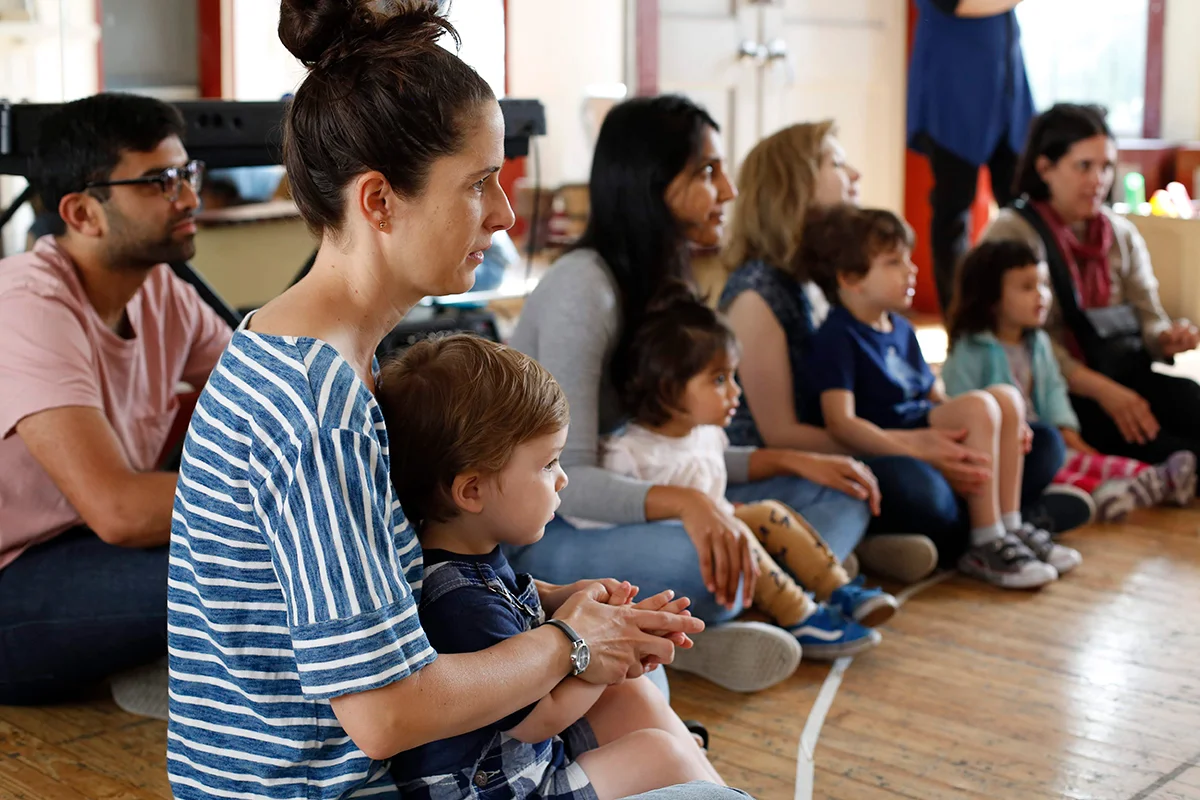
Music Is Essential for Young Children
Singing and music play an important role in our everyday lives. Music is present in theater, television, movies, holidays, and other celebrations. From birth, parents instinctively use music to …
Singing and music play an important role in our everyday lives. Music is present in theater, television, movies, holidays, and other celebrations. From birth, parents instinctively use music to calm and soothe children, to express their love and joy, and to engage and interact.
Music for the early child is as important as any other sense. We learn to touch, to taste, to see, and to hear. But what we hear can invoke an expansive amount of internal growth, both in and outside of the classroom. Just as everyone likes food, everyone likes music. It is part of our inner being, and it is essential.
Even at an early age, children sway, bounce, or move their hands in response to music they hear. Many preschoolers make up songs and, with no self-consciousness, sing to themselves as they play.
INFANTS AND MUSIC.
Infants recognize the melody of a song long before they understand the words. They often try to mimic sounds and start moving to the music as soon as they are physically able. Making up one or two lines about something that may occur in their everyday lives makes a powerful impact on their mental growth and development.
TODDLERS AND MUSIC.
Toddlers love to dance and move to music. The key to toddler music is the repetition of songs, which encourages the use of words and memorization. Silly songs make them laugh. Dynamic changes and silly voices they can imitate are especially successful, as well as Echo songs, which increase language development and, also assist in understanding when to wait for your turn to participate.
PRESCHOOLERS AND MUSIC.
Preschoolers enjoy singing just to be singing. They aren’t self-conscious about their ability and most are eager to let their voices roar. They like songs that repeat words and melodies, use rhythms with a definite beat, and ask them to do things. Preschool children enjoy nursery rhymes and songs about familiar things like toys, animals, play activities, and people. They also like finger plays and nonsense rhymes with or without musical accompaniment.
USING MUSIC TO IMPROVE OTHER EARLY SKILLS
Music education carries a myriad of benefits for the young child. Not only does it help with the development of simple aural skills but, music education can also incorporate letters, numbers, patterns, and colors. Through rhythm, finger play songs, holding a mallet and hitting a drum, using shakers, playing a xylophone, and other instruments children increase fine and gross motor skills. Even stomping and clapping helps children to understand the space their body occupies and its capabilities. Group music sessions with young children improve social skills, as well. For example, in these music sessions, young students learn to wait their turn, listen, and properly participate.
----
Starting in September 2018 we are happy to expand our Early Childhood music class offerings from 2 classes a week only on weekends to 18 classes available 7 days a week.
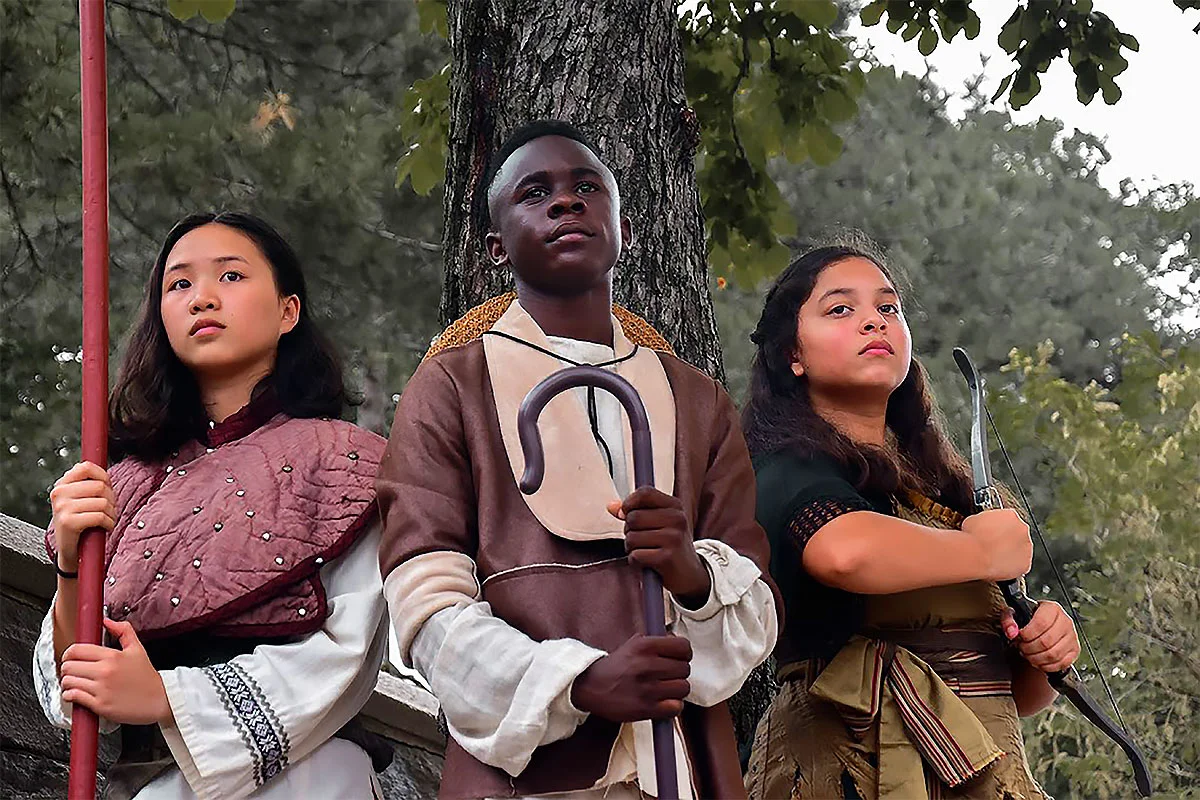
AUG 11: The Shepherd's Tale
Summer Vocal Arts Junior Artist’s program is proud to present the original musical production: “The Shepherd’s Tale” on Saturday, August 11.
SVA Jr. Presents the Original Musical:
The Shepherd's Tale

PHOTO CREDIT: JAZNINA SANTIAGO
Brooklyn Music School (BMS)’s Summer Vocal Arts Junior Artists Program presents The Shepherd’s Tale on Saturday, August 11, 2018 at 4pm at Brooklyn Music School, 126 Saint Felix Street, Brooklyn, NY.

PHOTO CREDIT: JAZNINA SANTIAGO
The unlikely love story of the shepherd and the huntress will be told by the talented SVA Jr artists. In this whimsical tale inspired by the mythological Venus and Adonis we are introduced to the world full of challenges that this unlikely romance must withstand. When the disheartened cupid mistakenly shoots his arrow into the heart of the wrong candidate, hijinks ensue. But never fear; in this new tale all ends well.
Pamela Martinez - composers and lyricist
Deborah Wright Houston - costumer
Marie Zvosec - stage director and choreographer
Shia Cardona - playwright and composer
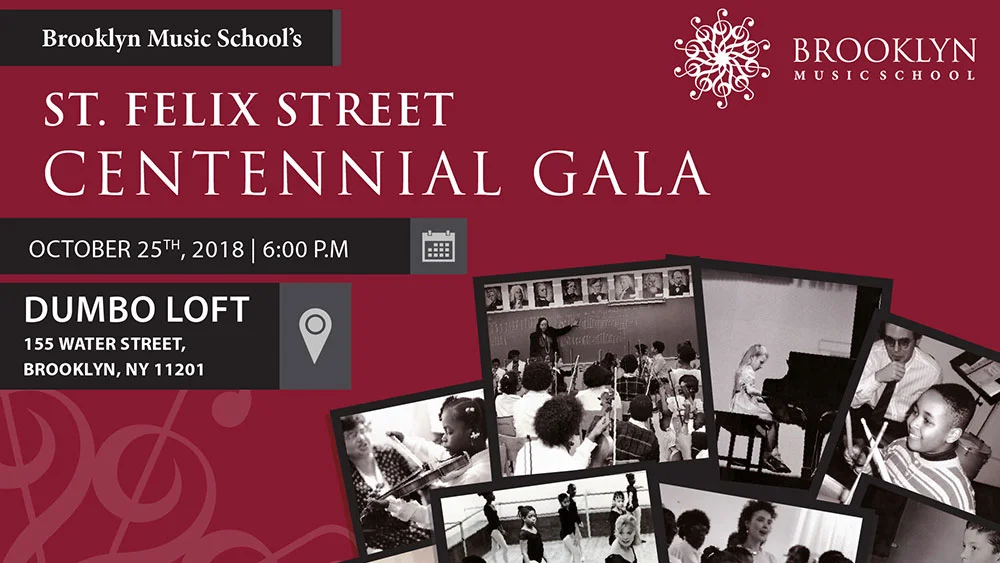
Celebrating 100 Years On St. Felix
On October 25th we will celebrate 100 years of being on St. Felix Street at our Annual Gala. Join us for what is sure to be a memorable event.

SAVE THE DATE FOR OUR ANNUAL GALA!
2018 is a big year for the Brooklyn Music School! We are celebrating the centennial of being on Saint Felix Street. Our historic home continues to serve as the place where children, parents, and the community come together to celebrate the joys of music.
Please join us as we celebrate all things BMS on Thursday, October 25, 2018, at the DUMBO Loft.
This year’s gala will feature performances by students, faculty, and will celebrate the rich history of the Brooklyn Music School on Saint Felix Street. Moreover, we are delighted to honor multi-Grammy award-winning Jazz artist Arturo O’Farrill for his continued commitment to community music schools and enriching the community with the performing arts.
If you’d like to help with the planning of this event, please email us at gala18@brooklynmusicschool.org and our team will get in touch with you. We are seeking people to help with silent auction items. If you know of anyone or would like to donate something, please email us!
Thank you for your continued support of the Brooklyn Music School. I hope to see you in October as we celebrate all things BMS!

More Early Music Classes
We are happy to announce expanded offerings of Early Childhood Music and Movement Education Classes for ages infant through 4-years-old beginning in September 2018.

We are happy to announce expanded offerings of Early Childhood Music and Movement Education Classes for ages infant through 4-years-old beginning in September 2018.
Music is compelling for young children and is highly beneficial for their mental and social development. BMS Early Music employs cutting-edge techniques in early music education to encourage social and cognitive development, while focusing on building language, visual, physical, and aural skills.
The BMS Early Childhood Music curriculum combines proprietary approaches to early music education with the best of early education methodologies and has developed learning benchmarks that reflect consultation with NYC-Blueprint for the Arts.
BMS’s Early Childhood Music curriculum emphasizes experiential learning – singing, moving, creating, seeing, hearing, touching – in an effort to encourage an empirical connection with music at an early age that will manifest in lifelong development. BMS believes their curricular mission is best accomplished through concerted efforts between parents and professional music educators, as well as constant reflection upon our value for the creative process.
BMS Early Childhood Music lessons develop word, color, and letter recognition to enhance early interpretation of everyday life through:
- Music Making: through exploration, replication, and observation, students can develop their unique voice in music and how it can impact their everyday lives.
- Music Literacy: developing a working knowledge of music language and applying this knowledge to performance, analyzing, and creating music.
- Making Connections: exposure to common themes and principles of music through historical, social, and cultural contexts.
- Community and Cultural Resources: students can broaden their perspective by working with professional artists and having regular exposure to different musical mediums, creating a fertile ground for students’ music learning and creativity.
- Careers and Lifelong Learning: students carry physical, social, and cognitive skills learned in music, and an ability to appreciate and enjoy participating in music throughout their lives.

Current Course Offerings
Students and parents/caregivers will engage in musical activities with instructors promoting musical and educational growth. Students and caregivers will be exposed to various instruments and musical mediums. Sing-alongs, echo songs, finger play, early instrumentation (bells, sticks, hand drums, guitars, ukulele, keyboards) as well as visual stimulation (puppets, musical books, scarves, visual prompts). From birth, parents use music to calm and soothe children, to express love and joy, and to engage and interact. Our Early Music Education Program will enable parents to build on these instincts by learning and observing how music can impact a child and how they can impart music into aspects of their everyday lives.
Class size 10-12; Parents/Caregivers attend; 50min; 12-week sessions from 9/6 – 12/20; $15/class
Students and Teachers will further their musical experience through singing, movement activities, and working with various instruments. Students will further their understanding of voice and musical/instrumental recognition through early introduction to instruments, music and movement activities, echo songs, call and response, finger play, and musical games. Music ignites all areas of child development from intellectual and social, to motor language and literacy. This program is designed to expose young children to Music in all its forms while also continuing the Early Education process to promote school readiness.
Class size 12; 50min; 12-week sessions from 9/6 – 12/20; $15/class
Each week, we will be exploring many instrumental families: percussion, strings, piano, etc., while also focusing heavily on singing and movement activities. While learning about each instrument or learning a song/routine, we will also explore musical concepts such as tempo, dynamics, and timbre through musical activities and games. During certain classes, BMS instructors will introduce and demonstrate a variety of instruments. Music FUNdamentals provides a musical foundation for students and acts as a great starting point for private lessons.
Class size 12; 50min; 12-week sessions from 9/6 – 12/20; $15/class
Students will have hands on experience learning about the structure and integrity of various instruments and their inner workings by looking, touching, listening, and re-creating these instruments they have studied using various art materials.
Class size 12; 50min; 12-week sessions from 9/6 – 12/20; $15/class
This class continues to expose young musicians to musical concepts, but increases rigor by providing students with the opportunity to experience, identify, and describe what they are learning. In addition to similar games and activities provided in the foundational classes, this course introduces a different instrument group each week. Students will have the opportunity to engage with a variety of different instrument families and see how each instrument is played. This is a great class to allow students to find a "pathway" to an instrument that speaks to them and explore the benefits of practicing music.
Class size 12; 50min; 12-week sessions from 9/6 – 12/20; $15/class
Toddler Yoga & Dance (Ages 2-3)
This unique program is run in partnership with MUSE Academy and is offered for parents who wish to expose their children to dance, yoga, and music at an early age. Children at these ages undergo massive cognitive, social, and emotional changes which enable them to understand the world around them. In this class, children will experience warm and nurturing sensations through experiences focused on creativity, sensory awareness, and social development. Additionally, kids will refine their motor skills and energy regulation, while developing a natural sense of rhythm through music and movement.
Class size 10; 45min; 12-week sessions from 9/17/18 to 12/17/18

Faculty
Eva Leftenant, Department Chair, is a classically trained singer and songwriter from Long Island, NY. She graduated with a BA in studio composition from the music conservatory at SUNY Purchase. She studied songwriting, recording, engineering, music business, piano and performance. After college she joined AmeriCorps where she taught at risk youth in various subjects including guitar. She also ran an after school program for students needing help with homework. After her term of service, she began working as a Music teacher in various pre schools on long Island. She then moved to Brooklyn and took a Music teaching job at the Fort Greene Clinton Hill Co-Op school. She then graduated to lead teacher but decided to join BMS to pursue her own Music Career and continue to teach Music to children. Eva is excited to join the BMS team and hopes to help expand the Early Childhood program.
Andrew Brubaker
Andrew Brubaker is a music educator, pianist and singer out of Brooklyn. He received his Bachelor in Music from the Cincinnati Conservatory of Music in Vocal Performance, Master in Music from New York University in Vocal Performance, and Master of Music Education from Hunter College. He is a New York State Certified music teacher (PK-12) and currently teaches sixth grade music at Evergreen Middle School in Brooklyn. Andrew is also pursuing certifications in Kodaly (Level I completed 2017 NYU, Level II completed summer 2018 SEATTLE), Orff (Level I completed 2017-2018 NYCCAOSA), and Dalcroze (Level I 2018 LUCY MOSES SCHOOL).
Holley Bartlett-LaSala
Holley Bartlett-La Sala holds N.Y.S. Teacher Certification in Music Pre-K-12, a Master's Degree in Music Performance from Hunter College CUNY, and a Master's Degree in Music Education as a Lincoln Center Scholar / Hunter College, CUNY. Holley teaches Flute, Recorder, Piano, Chorus, Early Elementary Music and Music Appreciation, and has many years of teaching experience in schools and programs throughout New York City, as well as in individualized instruction. Her most recent faculty positions are at Brooklyn Music School, Bronx House Performing Arts School and Brooklyn Heights Montessori School.
Ty Citerman
Ty Citerman is a Brooklyn-based guitarist and composer who writes, performs and teaches music across the spectrum of jazz, rock and contemporary classical. He is a founding member of the irreverent chamber jazz quartet Gutbucket; he leads the radical Jewish ensemble Bop Kabbalah; and he writes chamber music that’s been performed by JACK Quartet, Anti-Social Music, Sara Schoenbeck and Bearthoven. His music appears on Cuneiform Records, Tzadik Records, Cantaloupe Music, Enja, Knitting Factory, NRW, and Gut Records. Guitar Player called Ty's music for Gutbucket "kinetic punk jazz opuses" that “reveal an explosive concoction containing lethal doses of Ornette Coleman, King Crimson, John Zorn, Black Sabbath, Stravinsky, and Fugazi." He's also been featured in Downbeat, The Guardian, The New York City Jazz Record, The Philadelphia Inquirer, The Sydney Morning Herald and JazzTimes, which called Bop Kabbalah (2014) “…one of the year’s most arresting recordings…”

Interview: Pamela Martinez, Composer
I definitely think that having a team of Brooklyn creators and women creators working on original content for children is pretty awesome…

by Rachel Wilson
On Saturday June 23, the Brooklyn Music School’s Music Theatre Program will present the performance of “To Dream a World”. This unique performance features an original tale of how William Shakespeare imagined the characters for his works. As a boy, his dreams take him to magical worlds where he meets the characters that eventually end up in his plays.
Pamela Martinez is a voice, piano, violin, guitar, and harp instructor at Brooklyn Music School. I spoke with Pamela, who is one of the composers and lyricists for “To Dream a World,” and asked her about her work with the show and why it is unique and worth seeing.

Q: What do you think makes this production unique?
A: I definitely think that having a team of Brooklyn creators and women creators working on original content for children is pretty awesome. I feel like that can only happen in Brooklyn because there are so many creators here. Also, I think having this particular play is unique because it’s a Shakespearean focused play for children. It’s not one of his plays, so it’s not a watered-down version of his art, it’s a new piece that introduces children to the art and work of Shakespeare. Creating Will as a child so children will be interested in it, it’s a fictional biography of Will Shakespeare as a kid, which I can tell the children were connecting to.
Q: What was the inspiration behind the show/music?
A: We begin with a concept worth writing about and teaching about. We thought it was worth teaching about Shakespeare, we thought it was worth writing about the seasons. We usually base it on a myth, a fable, another opera or a character, a fictional or real life character. But we start with a teachable concept or concept we feel is worth teaching about, in this case it was William Shakespeare. In other cases, Greek or Roman mythology, or another composer we can teach about that inspired the work that we can completely recreate music for based on a character or myth.
Q: What is the overall process for putting together a show like this?
A: It’s a lot, a lot of work. Opera is the Italian word for WORK and they’re not kidding. The original intention was to create an original piece of art that was all of us together. I like working on this team, I like building a team that has like a lexicon, a library of experience to draw on. We’re growing together, it’s not 3 months at a time, it’s not a semester at a time, it’s growing over years. I’ve worked at BMS for 8 years and I’ve been writing for this project for two years.
Q: What is it like working with the students?
A: This season I didn’t work with the students directly. I have before. The best I can say is it’s best that the students work up to the task. We have professional, high level expectations. It’s not baby stuff. This is one that is pre-conservatory training, we have pretty high expectations for our performers. Not every student continues their studies but the ones that do, they flower and they blossom and they learn, so it’s the students growing as well as the writing and directing team. I’ve been writing music for like, 20 years, I started when I was a kid. I’ve mostly been seeing myself as a songwriter than a composer. I have a lot of experience recording, and I think this is the next step, taking the children into the studio, and teaching how music is passed along. I think that’s a big part of being a performer, learning how to share your work.
I have another project I work with called Whisper Lodge. It’s immersive theatre, it’s seasonal. We’ve had NY Times reviews, Buzz feed News reviews. A Netflix Documentary for the project comes out in July. That one I direct as well and work with the teens. I think there are very talented young people in Brooklyn. I mean all over, but luckily, they hear about Brooklyn Music School because we are at the heart of Brooklyn and we’ve been around for 100 years. We have a mentoring program for students who are under 18 who want to work for the school. I feel like that program has been centered towards rock students, for some reason. I would love to see more mentors brought in through the musical theater and dance programs. I don’t have a lot of harp students, there’s harp in the play and I‘m the harp instructor. I have two piano students that I’ve converted to harp, but I would love to find more harp students. I teach a lot of things but I would love more harp students!
Q: What do you think makes this show worth seeing?
A: The costumes are phenomenal! It’s worth seeing, it’s a very photographical play. Something unique about the costuming, which was done by Deborah Houston, is she used to run a Shakespeare company, so the costumes come from an authentic company. I would throw out the idea as far as parents who are looking for projects for their children. We’re studying content that is important and essential for a budding artist, studying some sort of literature or art.
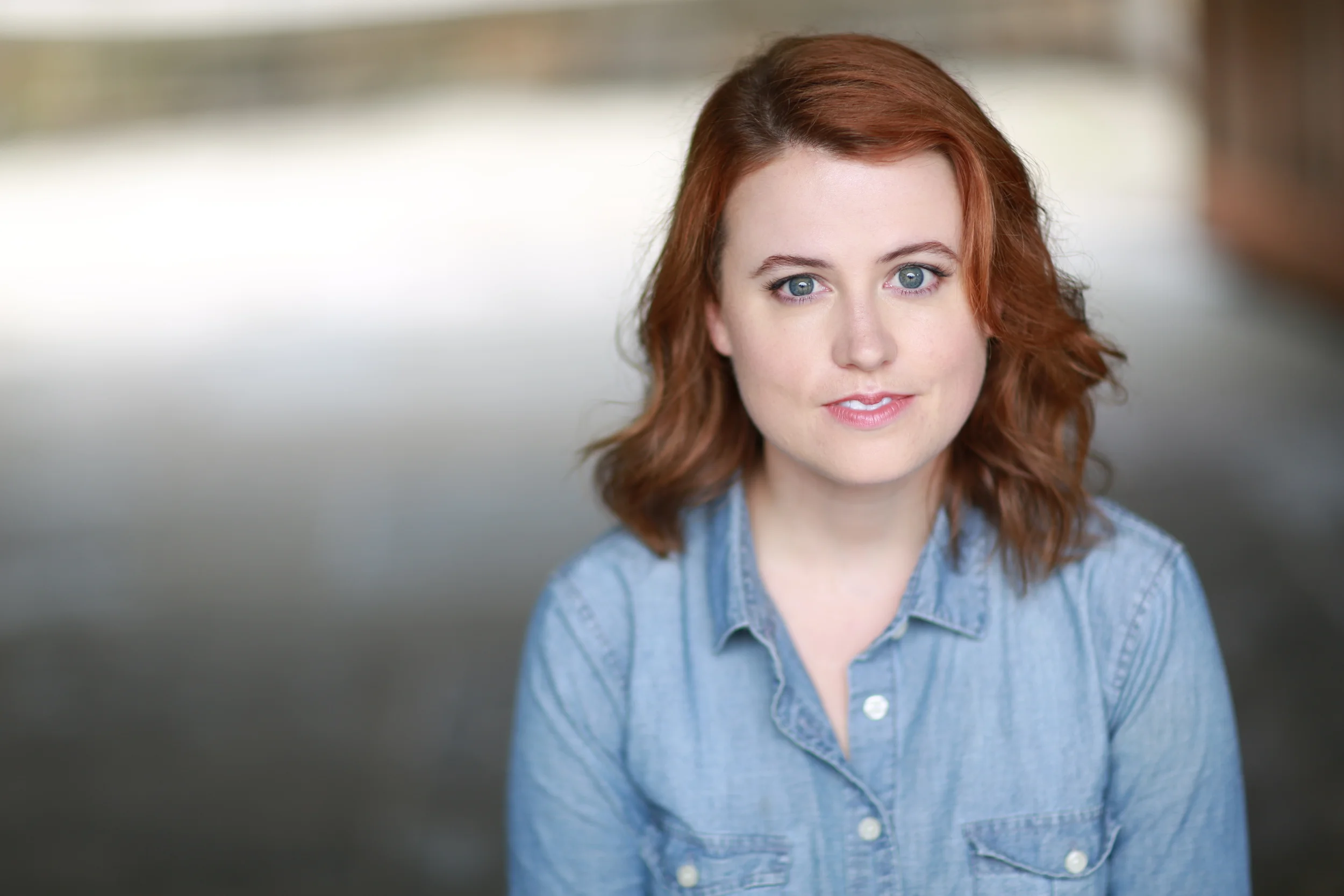
Interview: Danielle Carroll, Playwright
Danielle Carroll is one of the playwrights for “To Dream a World”, and we spoke with her about what makes this show unique, the process behind it, and why you should attend the show …

by Rachel Wilson
On Saturday, June 23, the Brooklyn Music School’s Musical Theatre Program will present the performance of “To Dream a World”. This unique performance features an original, fictional tale of a young William Shakespeare and how he imagined the characters for his works. As a boy, his dreams take him to four magical worlds, which are represented by the four seasons. In these worlds, he meets the characters who will eventually end up in his famous plays.
Danielle Carroll is an actor, writer, and producer who has worked on original shows with BMS in the past. I spoke with Danielle, one of the playwrights for “To Dream a World”, and spoke with her about what makes this show unique, the process behind it, and why people should attend it.
Q: What do you think makes this production unique?
A: I think that this production is unique in that it incorporates Shakespeare’s greatest and lesser-known plays and sonnets into a cohesive tale. It is a fun look into the imagination of one of our greatest playwrights.
Q: What was the inspiration behind the show/music?
A: I remember being little and having this little pile of dirt right outside my bedroom window. I kept imagining a flower growing out of this pile. I would go to sleep looking out the window and imagine this beautiful flower. And I remember waking up one day and actually seeing a flower growing from this pile, almost as if I had willed it to happen. I still don’t know if I made it up or it was part of my dream. This image returns to me time and time again, and when we began exploring Shakespeare’s plays, I remembered this flower. I thought it would be a fun and imaginative way into Shakespeare’s worlds. The rest grew from that image.
Q: Why do you believe people should attend this show?
A: Shakespeare remains the greatest playwright because the themes he explores are timeless and his characters reflect human nature in its many forms. A Midsummer Night’s Dream is especially relevant in today’s climate, and to see something like this allows us to examine ourselves. I think we could all use the theater to guide us into worlds not so unlike our own. Sometimes our imaginations are more powerful than we know.
Q: What is the overall process for putting together a show like this?
A: Collaboration, collaboration, collaboration. It always starts with a small seed. The more you work with others, the more a concept grows and changes. Each layer adds something new to the story, and before you know it, the story has turned into something you could never have imagined. Working with Deborah on the text and her deep knowledge and love for Shakespeare was so essential in boiling down the key themes and creating this world. It comes from passion, and when you get so many talented people together who all bring something different to the table, magic can happen.
Q: What is it like working with the students?
A: Getting a group of 5-13-year-olds working on the same production is not an easy feat, but it is amazing to see the excitement and interest that they have and how they work together. Having the opportunity to introduce Shakespeare to a young group of students is so exciting and important, and these students really stepped up to take on the challenge. The language in the play isn’t easy, as a lot of it is taken straight from Shakespeare’s works, and they have done an excellent job of bringing that language to life.
Q: What was your favorite part of working on this production?
A: Seeing the students discover Shakespeare and these new worlds for the first time reminded me why I love the theater. I’m from a small town and the summer stock theater saved my life. I couldn’t believe that all of these different worlds could exist right down the street from me. This is why I moved to New York and continue to do what I do.
Q: Do you have any final thoughts or anything else you would like to add about the show?
A: I hope you enjoy it!
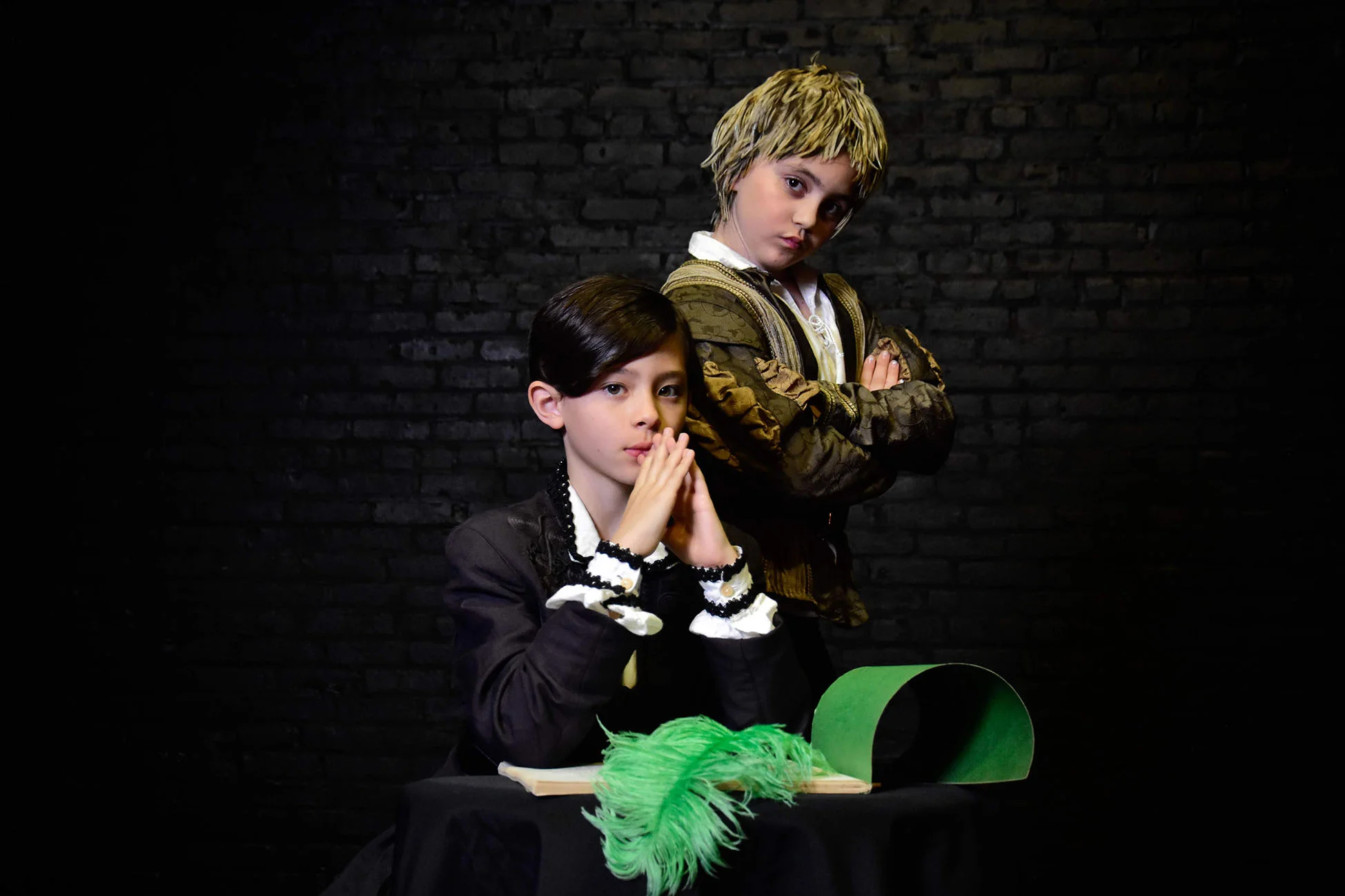
June 23: To Dream a World
In "To Dream a World," our talented musical theater students, tell the story of a young boy named Will, who finds his inspiration in his dreams …
Brooklyn Music School (BMS)’s Music Theatre Program presents To Dream a World on Saturday, June 23, 2018 at 3pm at Brooklyn Music School, 126 Saint Felix StreetBrooklyn, NY. Tickets are $20 ($15 BMS Students and Parents)
"Are you sure/That we are awake?
It seems to me/That yet we sleep, we dream." ~William Shakespeare
"To Dream a World" tells the story of a young boy named Will, who finds his inspiration in his dreams. Full of meaning and fantasy, the four imaginative worlds he explores represent the four seasons. This is where he meets the characters that later end up in his plays.
“The BMS musical theater program offers a unique opportunity for young actors to participate in original works incorporating acting, singing, and dance that are staged at a high level of production value in the BMS Playhouse for the Brooklyn community,” said Piruz Partow, executive director of Brooklyn Music School. “We are particularly excited about our spring production, which will bring Shakespeare’s imagery and poetic imagination to life in a way that children can relate to and captures the sense of wonder that informs every child's natural creativity.”
Music and lyrics by: Pamela Martinez, Aidan Arbona and Danielle Carroll
Stage direction and chreography by: Marie Zvosec
Costumes by: Deborah Wright Houston
Sets and Lights by E.F. Morrill

June 2: Concert in Fort Greene Park
Bring your friends and family, pack a picnic, stroll through the artisans market and join us for a concert in the park featuring BMS bands and ensembles, as well as some other local student talent!
Bring your friends and family, pack a picnic, stroll through the artisans market and join us for a concert in the park featuring BMS bands and ensembles, as well as some other local student talent! Celebrate the summer with us!
Featuring a variety of BMS Bands and Ensembles from 9 a.m. - 1 p.m.
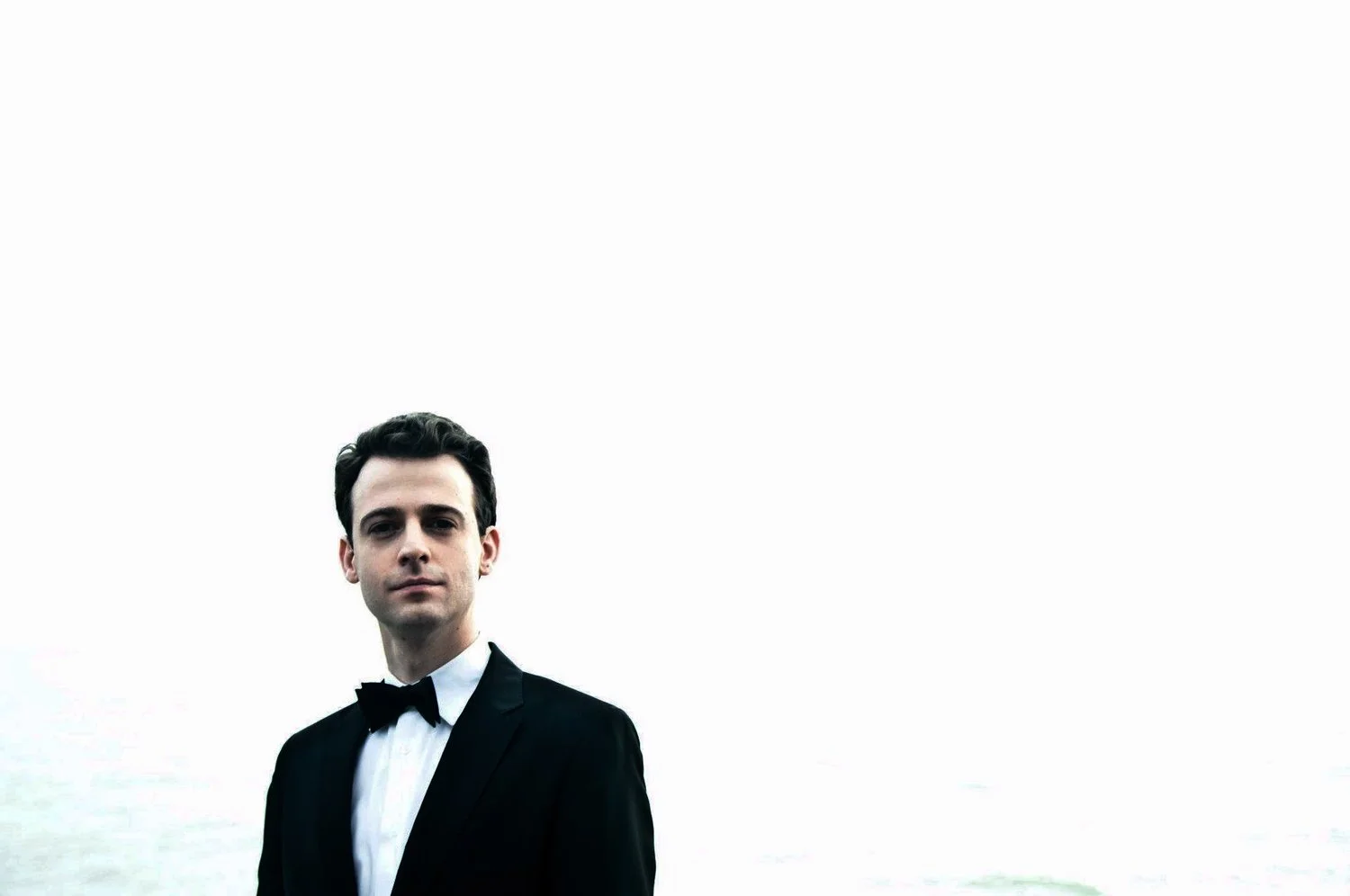
May 8: Masterclass with George Lepauw
In coordination with the French Cultural Services agency, we are delighted to welcome acclaimed concert pianist and cultural activist George Lepauw to the BMS Theater for a masterclass.
In coordination with the French Cultural Services agency, the Brooklyn Music School is delighted to welcome acclaimed concert pianist and cultural activist George Lepauw to the BMS Theater for a special Masterclass on Tuesday, May 8th at 6:30 PM.
This Master Class is free and open to all.
Prominent French composer Claude Debussy (1862-1918) brought a seminal force to modern music of the 20th century. To celebrate his work, masterpieces and influence on major composers, painters and writers, the Cultural Services of the French Embassy and the French-American Piano Society present a series of events from May 8-10, 2018.
“A prodigious pianist and a cultural activist who likes to shake it up!” (Chicago Tribune)
George Lepauw obtained his Bachelor of Arts degree from Georgetown University in Washington, D.C. with a double major in English Literature and History, and received his Master of Music in Piano Performance from Northwestern University. He is a founding member of the Chicago Ideas Co-op, a leadership committee of the Chicago Ideas Festival. His creative projects include recordings, films, and multimedia explorations on Johann Sebastian Bach’s complete Well-Tempered Clavier, Debussy’s and Chopin’s Preludes, and Beethoven’s Sonatas.

May 6: Struttin' with some BBQ
Brooklyn Music School (BMS) presents an afternoon of Burnin’ Jazz and Hot Barbecue, Struttin’ With Some Barbecue, a fundraiser for the BMS Jazz Department, on Sunday, May 6, 2018 at 3pm
Brooklyn Music School (BMS) presents an afternoon of Burnin’ Jazz and Hot Barbecue, Struttin’ With Some Barbecue, a fundraiser for the BMS Jazz Department, on Sunday, May 6, 2018 at 3pm at the Brooklyn Music School Playhouse, 126 Saint Felix Street, Brooklyn, NY. Tickets are $30 ($75 for family tickets)
Titled after a composition by Louis Armstrong and Lilian Hardin, Struttin’ With Some Barbecue will help support the rapidly blossoming Brooklyn Music School (BMS) Jazz Department. It’s a chance to enjoy the down-home feel of southern food, swinging music, and jazz community that will make anyone think they’ve been transported straight to New Orleans, all the while helping support Jazz at BMS.
The afternoon will feature performances by all three of the BMS Student Jazz Ensembles, the BMS Jazz Faculty Ensemble, and an appearance by the world-renowned jazz drummer and BMS Artistic Advisory Board Member Dr. Victor Lewis. Victor’s dynamic drumming style and musical personality have supported influential bandleaders from Dexter Gordon and Woody Shaw to David Sanborn. He co-leads the groundbreaking band “Horizon” with Bobby Watson and has been on faculty at Rutgers University Mason School of the Arts for over 14 years.
Like those New Orleans “Magnolias in bloom,” the BMS Jazz Department has undergone incredible growth over the last five years. Having added two student Jazz Ensembles and recently completed our fifth annual BMS Middle School Jazz Festival, we are looking forward to our third BMS Summer Jazz Workshop, our third FAB/BMS Fall Jazz Faculty series, and will include a Jazz Intensive as part of this year’s BMS Summer Institute.
Contributions will help the BMS Jazz Department by providing support for our Summer Jazz Workshop, the Middle School Jazz Festival, as well as scholarships for deserving students who would otherwise not be able to participate in our programs.
With influential musicians like Eric Dolphy and Gary Bartz once living down the street the Brooklyn Music School has long been surrounded by the sound of jazz in its location in the heart of Fort Greene. The great vocalist Betty Carter lived across the street and pianist Cecil Taylor is still living around the corner. Over the years BMS has been graced with their music as well as performances by saxophonists Jimmy Heath (an NEA Jazz Master), Dewey Redman, and Sherman Irby - trombonist Robin Eubanks, and most recently trumpeter Ingrid Jensen.
Don’t miss this wondrous opportunity to help support the BMS Jazz Community while having a HOT TIME! with a great meal. GUARANTEED!

April 22: Exchange Concert Ecole d'Art Musical
Brooklyn Music School (BMS) presents an Exchange Concert with Suzuki String Students from Ecole d'Art Musical on Sunday, April 22, 2018 at 6pm
Brooklyn Music School (BMS) presents an Exchange Concert with Suzuki String Students from Ecole d'Art Musical on Sunday, April 22, 2018 at 6pm at 126 Saint Felix Street, Brooklyn, NY. Tickets are free.
Join BMS for a special concert where they welcome students from the acclaimed Ecole d'Art Musical - a Suzuki Strings School in Paris, France. Over 50 students and parents of all ages will come from Paris to the Brooklyn Music School to participate in a cultural and musical exchange through the medium of music. In the concert, students from both schools will perform pieces together and separately.
Throughout the years, the Brooklyn Music School has participated in several musical exchanges with schools in Europe, including music schools in Belgium and France. The strings department in the Brooklyn Music School has grown significantly over the past several years as well. What started as a small chamber orchestra has blossomed into a full youth orchestra and two adult orchestras!
BMS strings students and students from Ecole d'Art Musical will join together on the BMS Theater stage for a concert showcasing how music unites and goes beyond borders of language and nationality.
Ecole d’Art Musical
Founded in 2012 in Paris, France, the Ecole d’Art Musical offers lessons to children starting as young at 3 years old. The pedagogy at Ecole d’Art Musical is inspired by the Suzuki and Rolland methods. This teaching method respects the speed of progression of each child, and it is based on a triangular balanced participation of the teachers, parents, and students. At Ecole d’Art Musical, there is the possibility for children to get together with each instrument and to rehearse orchestral pieces and also solo pieces in front of their classmates. Ecole d’Art Musical strives to create an emotional and supportive relationship between the students and supports them in developing their autonomy. This is a school where children learn to listen to each other, to respect each other, and to work together (in their collective lessons and concerts).
The Brooklyn Music School views music and performance as the birthright of all people, an essential way that human beings connect with others and explore their creativity. The study of music has been demonstrated to enhance academic learning and helps to develop discipline and confidence that will serve children well throughout their lives. As part of the vision of reinventing the community music school for the 21st Century, BMS is dedicated to:
* Making high quality musical instruction approachable and affordable to a wide range of students,
* Creating frequent opportunities for performance for our students and cultural enrichment for our community,
* Representing a wide range of musical traditions, including European, African, Middle Eastern, and American to represent the diversity of Brooklyn's musical talent, and
* Offering a warm and welcoming space for families and individuals to explore new talents and make lasting friendships.

INTERVIEW: Nels Cline
In anticipation of his upcoming sold-out Jimi Hendrix Tribute concert at BMS on February 24, 2018, we asked Nels Cline of Wilco, a few questions about what inspired him to join BMS's Artistic Advisory Board, and what Jimi Hendrix means to him.

This past Autumn, the Brooklyn Music School (BMS) welcomed several new members to its Artistic Advisory Board. Each member of the Artistic Advisory Board brings a unique perspective, insight, and experience that is sure to support the Brooklyn Music School as it continues to grow and offer inspiring programming for music and dance students of all ages.
In anticipation of his upcoming sold-out Jimi Hendrix Tribute concert with the Brooklyn Music School on February 24, 2018, we asked Nels Cline of Wilco, a few questions about what inspired him to join BMS's Artistic Advisory Board, and what Jimi Hendrix means to him.
Here's what he had to say.
Q: What about the Brooklyn Music School Inspired you to get involved?
Nels: I was approached through the gentlemen Seth Rosner, who run the excellent jazz record label Pi Recordings, to meet the school’s administrators about being on the advisory board, and as a fairly recent resident of Brooklyn and as one who is usually out of town playing, I thought that involvement on some level would offer the opportunity to contribute to my new community in some way. When I met with everyone and got a feel for what the school is about, I immediately loved it. The aim of providing music education for people of all ages and backgrounds is a noble one. I hope I can help in some way to make people aware of what the school is doing and to keep it thriving.
Q: What perspective or experience do you look forward to sharing with the Brooklyn Music School Community?
Nels: My musical background is not particularly academic, but my age (I am now 62!) and rather diverse stylistic impulses may make me an interesting voice to add to those already on staff at the school. My personal trajectory as a late-bloomer/late “success” could be a very encouraging story for musicians of all ages. It’s very hard to “make it” in music, and my consistent message has been to persevere and to try to follow one’s inner voice and not be deterred by disappointments and/or non-artistic pressures.
Q: What inspired you to want to do a Jimi Hendrix tribute?
Nels: Well, it was really the school’s idea! It was suggested because they knew that my decision at age twelve to play guitar for the rest of my life happened when I heard Jimi back then, in 1967. I agreed to the idea right away. I sure hope I can do the music justice!
Q: What significance does Jimi Hendrix have for you in your life?
Nels: See my previous answer. Beyond that statement, Jimi still embodies the most potent, colorful, innovative, personal, exciting aspects of music - for me and, quite obviously, for millions of others the world over. The work still gets me revved up and inspires not just guitar expression/histrionics but creativity at its most electrifying. And at the core of it all: the Blues...
Q: Do you have a fun fact to share about you or your instrument?
Nels: When I was young and thrilled by music and by Jimi, I never tried to play like him at all, thinking it was A) impossible, and B) almost sacrilege - Jimi seemed like pure magic, superhuman or something. I designed to be modest, un-flashy. Now, look what’s happened!

SOLD OUT! Jimi Hendrix Tribute, ft Nels Cline
Nels Cline, Artistic Advisory Board Member for BMS, takes the stage on February 24 to pay homage to Jimi Hendrix. This cross-generational show celebrates the musical genius of Jimi Hendrix that goes beyond boundaries of time and space.
“Music doesn't lie. If there is something to be changed in this world, then it can only happen through music.” -- Jimi Hendrix
Nels Cline, Artistic Advisory Board Member for Brooklyn Music School, takes the stage on February 24 to pay homage to Jimi Hendrix. This cross-generational show celebrates the musical genius of Jimi Hendrix that goes beyond boundaries of time and space. Student bands from Brooklyn Music School will also be joining in for some of the classic Jimi Hendrix songs. Expect to hear a wide array of classic Jimi Hendrix songs from Foxy Lady to Jam Back at the House and everything in between. The show will also feature light projections by DRIPPY EYE.
Line-Up:
Nels Cline - guitar, vocals
Trevor Dunn - bass
Donald McKenzie - drums
John Medeski - keyboard
Featuring Light Projections by DRIPPY EYE
Photos Credit: Nathan West

February 3: ExME with Marjan Farsad
Marjan Farsad and her band will return to play in Brooklyn NY at BMS's East by Middle East Festival. The band will perform rearrangement of songs from "Blue Flowers" plus new tunes.
Marjan Farsad and her band will return to play in Brooklyn NY. The band will perform rearrangement of songs from "Blue Flowers" plus new tunes.
Tickets: $22-$26-$30
Saturday, Feb 3, 2018 7:00 PM (Sold out!) and 9:00 PM (some tickets still available)
Marjan Farsad - Vocals
Alex Clough - Keys
Steve Mayone - Guitar
Antón Serrats - Bass
Yahya Alkhansa Drums
Nima Farzaneh - Accordion
Photo by: Morteza Khaki

February 10: Songs Full of Heart
Come join us in celebration of love and music at our annual Valentine’s Day Concert.
Come join us in celebration of love and music!
February 10th @ 5:00 p.m. at the Brooklyn Music School | 126 St. Felix Street, Brooklyn, NY 11217
The Brooklyn Music School is proud to present the 5th annual Valentine's Day concert entitled "Songs full of Heart". Produced by the Vocal Department, the concert will feature our talented BMS vocalists and ensembles performing songs that speak of the power of love and human connections. Beyond words, the program will feature tunes that melt hearts and inspire bonds.

Jan 13: MLK Jr. Tribute ft. Lester Lynch
Brooklyn Music School is honored to present the 16th annual Martin Luther King Jr. Tribute concert hosted by renowned baritone and BMS advisory board member Lester Lynch.
Brooklyn Music School presents
Martin Luther King Jr. Tribute: Spirit of Hope
Featuring Lester Lynch
Saturday, January 13, 2018 at 5 p.m.
Brooklyn Music School (BMS) presents Martin Luther King Jr. Tribute: Spirit of Hope on January 13th, 2018 at 5pm. BMS is located at 126 Saint Felix Street, Brooklyn.
"Out of the mountain of despair, a stone of Hope" – Dr. King
Brooklyn Music School is honored to present the 16th annual Martin Luther King Jr. Tribute concert hosted by renowned baritone and BMS advisory board member Lester Lynch. Inspired by Dr. King's legacy and message, the program will feature selections from Mr. Lynch's recent recording On My Journey Now: Spirituals & Hymns as well as performances by BMS faculty and students.
LESTER LYNCH, an established dramatic baritone, is making his mark in some of the world’s leading opera houses. Known for his charismatic portrayals and commanding voice, he is receiving rave reviews as he masters some of the most important baritone roles from Scarpia to Rigoletto to Count di Luna. Opera Today recently enthused, “It was booming baritone Lester Lynch who served notice that he is now in consideration for admittance to the Scarpia Preferred Pantheon - when he needed to pour it on he had the Puccinian fire power and the dramatic heat to raise the hair on the back of your neck.” The Cincinnati Enquirer wrote, “Lester Lynch made a superb Macbeth, delivering an authoritative performance with a firm, powerful voice and wonderfully communicating both tragedy and madness.”
His most recent performances include Lescaut in Puccini’s Manon Lescaut under the baton of Sir Simon Rattle with the Festspielhaus Baden-Baden, Crown in Porgy and Bess with the Opéra de Montréal, as Amonasro in Verdi’s Aida with Pittsburgh Opera, as Carbon in Cyrano de Begerac with San Francisco Opera, as Herald in Lohengrin with Lyric Opera of Chicago, as Gérald in Andrea Chénier with the Bregenzer Festspiele, as Nottingham in Roberto Devereaux and Count Di Luna in Il Trovatore with Minnesota Opera. His latest debuts include a back-to-back engagement with the Fundação Calouste Gulbenkian in Portugal where he was featured as Iago in Verdi’s Otello and in the title role of Verdi’s Falstaff.
Upcoming performances include Nabucco with the Welsh National Opera, Amonasro with the Bergen National Opera in Norway, and Shylock in The Merchant of Venice with the Warsaw National Opera. Upcoming recordings include Iago in Verdi’s Otello, Porgy in Gershwin’s Porgy and Bess and a Verissimo French Aria CD to be recorded by Pentatone Classics.
Mr. Lynch has worked with some of the world’s most renowned conductors and directors. Under the baton of Sir Simon Rattle and the Berlin Philharmonic, he has sung the role of Crown in Gershwin’s Porgy and Bess, and the Bauer in Schoenberg’s Gurrelieder. He has also appeared with conductors Sir Andrew Davis, Placido Domingo, Larry Foster, Ulf Schirmer, and John DeMain, and performed under eminent directors Sir Richard Eyre, Christopher Alden and Francesca Zambello.
His performance of Crown with San Francisco Opera ‘s production of Porgy and Bess was recently released on DVD. Pentatone Classics has released his recordings of two operas by the contemporary composer Gordon Getty – the title role in Plumpjack, and Cauchon in Joan and the Bells. Another important release is a recording of Mahler’s Symphony No.8 conducted by JoAnn Falletta.
Mr. Lynch’s regular repertoire includes Amonasro in Verdi’s Aida, Marcello in Puccini’s La Boheme, Germont in Verdi’s La Traviata, Count DiLuna in Trovatore, the tile role of Rigoletto, Iago in Otello, the tile role in Verdi’s Falstaff, Guglielmo in Puccini’s Le Villi, Paolo in Verdi’s Simon Boccanegra, Flint in Britten’s Billy Budd, Renato in Un Ballo in Maschera, Alfio in Cavalleria Rusticana, Tonio in I Pagliacci, Scarpia in Puccini’s Tosca and the title role in Verdi’s Macbeth.
An accomplished concert artist, Mr. Lynch has performed a wide and varied repertoire with orchestras across the world, including the Berlin Philharmonic, the New York Philharmonic, the National Symphony Orchestra, Houston Symphony Orchestra, Cleveland Orchestra, and the American Symphony Orchestra. His recent Carnegie Hall solo debut of Karl A. Hartmann’s Gesangsszene with the American Symphony Orchestra received rave reviews.
Mr. Lynch has received many distinguished awards, including the Metropolitan Opera National Council Auditions, the George London Vocal Competition, and the Sullivan Awards. His work with Opera Theatre of Saint Louis earned him the Richard Gaddes Award.
His recent volunteer work includes two engagements with the Harare International Festival of Art in Zimbabwe in 2012 and 2013 where he produced a night of arias and ensembles with a group of his colleagues.